Composable Primitives
Data management
Manage state, history, multiplayer presence, and schema migrations with tldraw’s type-safe data management system.
Reactive store
Keep UI, computed values, and business logic in sync by leveraging tldraw’s reactive data layer, which instantly propagates changes without manual state management.
Type safety
Define data with an enumerated set of valid records, each with strict types, including branded types that catch errors before they reach production.
History and undo/redo
Implement undo/redo functionality with built-in change tracking of configurable length. Every modification is a reversible operation that can be batched.
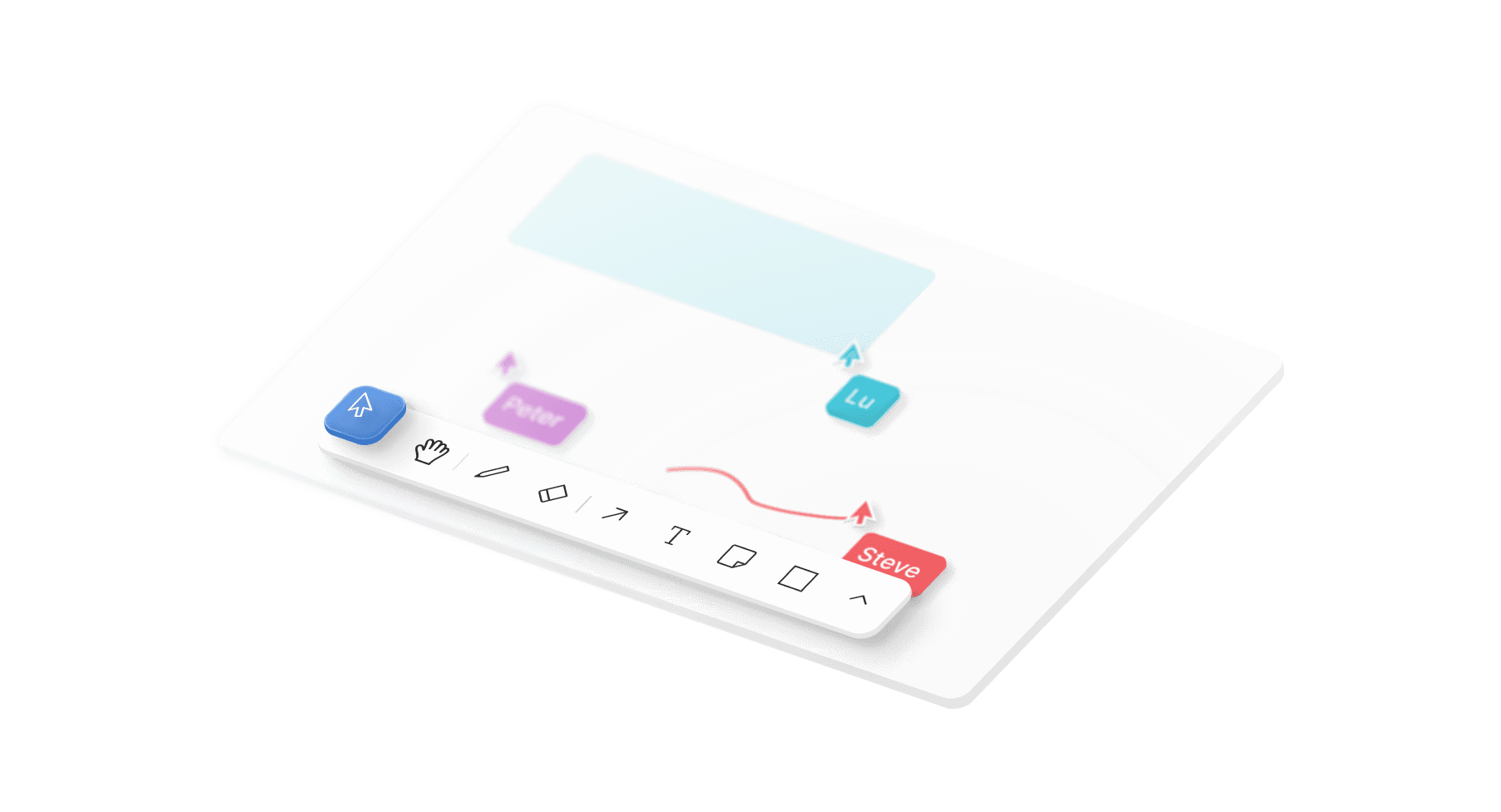
Collaboration-ready
Add multiplayer features in minutes with built-in simultaneous editing powered by tldraw’s collaboration system, which uses intelligent conflict resolution and data scoping.

Asset management
Handle large uploads and media files with advanced optimization, deduplication, and pluggable storage backends. Perfect for handling images, videos, and user-generated content.
Skip scaling headaches
Build data-driven canvas apps. let tldraw handle undo/redo, multiplayer, reactive updates, asset optimization.
Solid engineering
Our team spent years to get all the details right, so you don’t have to.
Scoped data organization
The data system structures application state into three scopes (document, session, and presence), each with tailored persistence and synchronization strategies. The document scope stores core content that persists across sessions and syncs across all users. The session scope manages user-specific preferences and UI state that remain local to the browser. The presence scope tracks real-time awareness data, such as cursor positions, which update instantly but aren’t stored long term.
Reactive state management
All data operations use reactive signals that automatically propagate changes to dependent components and computed values. When records change, the system identifies affected parts of the application and updates them efficiently without manual subscription management. This eliminates common state synchronization bugs and reduces boilerplate code while maintaining predictable update patterns throughout the application lifecycle.
Migration and schema evolution
The migration system ensures backward compatibility when loading data created with older schema versions. Each data snapshot includes version metadata that triggers automatic migration sequences during deserialization. Migrations apply transformations sequentially with comprehensive validation, enabling applications to evolve their data structures while preserving existing user content and maintaining data integrity across version boundaries.
Asset storage and optimization
tldraw handles large files through pluggable storage backends with intelligent optimization for different contexts. Upload workflows include automatic validation, deduplication through content hashing, and temporary preview generation for immediate user feedback. The system supports dynamic image resizing based on viewport requirements, format optimization for modern browsers, and network-aware quality adjustments to balance performance with visual fidelity across different connection speeds.
Quick start with multiplayer
Production ready starter kit to build a canvas application with multiplayer. Building something different?

Examples
See for yourself
Have a look at our examples on how to implement data management features.
Monitoring store events
Implement custom data change tracking and logging for debugging and analytics purposes.
Persistence configuration
Configure automatic data persistence with custom storage keys and migration handling.
Reactive state signals
Build responsive interfaces using tldraw's reactive state management and computed values.
Ready to grow with you
Let tldraw handle multiplayer, undo/redo, updates, and more.